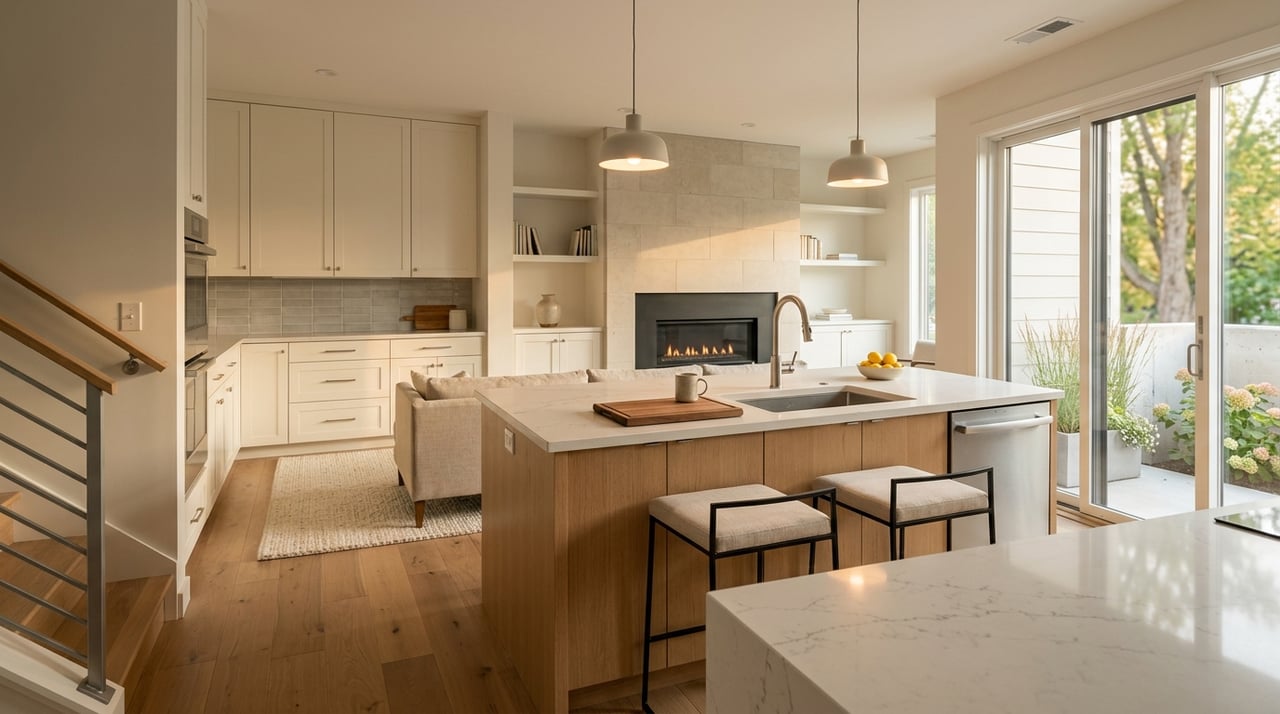
Are you starting to look around your house and wonder if you still need all this space? If yard work, stairs, unused rooms, or rising upkeep are taking more energy than you want to give, you are not alone. In Woodbury, downsizing from a house to a townhome is often less about giving something up and more about choosing a home that fits how you want to live now. This guide will help you weigh the tradeoffs, understand the local market, and plan a smoother move. Let’s dive in.
Why downsizing makes sense in Woodbury
Woodbury has been planning for more housing choice across different life stages, including options that support aging in place and easier transitions over time. The city’s housing goals reflect a mix of detached and attached homes, and local planning documents point to continued demand for owner-occupied multifamily and senior-specific housing through 2030.
That matters if you are thinking about a move from a single-family home to a townhome. It means your decision is not out of step with the market. It is part of a broader shift toward homes that offer less exterior responsibility, more flexibility, and a better fit for changing needs.
Housing costs also shape the conversation. Woodbury’s draft plan estimates a 2024 median home value of $441,100, which helps explain why some owners want to convert equity into a more manageable setup. For many households, downsizing is really about balancing cost, convenience, and peace of mind.
What the Woodbury townhome market looks like
If you are moving from a house, the attached-home price spread in Woodbury can be one of the biggest reasons to explore your options. Recent market figures show median sale prices around $494,748 for single-family homes, $334,270 for townhouses, and $196,925 for condo and co-op homes.
That gap gives you a useful starting point. Depending on your current equity position, a townhome move may reduce your monthly housing load, free up funds for other goals, or simply let you trade maintenance for convenience without leaving Woodbury.
Inventory also shows that buyers have real choices here. Redfin’s Woodbury townhouse data recently showed 92 townhouses for sale, with a median listing price of $340,000. It also noted 153 townhouses for sale last month, compared with 5 condos, which suggests townhomes may offer the widest range of attached-home options for downsizers.
How much space can you expect?
One of the biggest myths about downsizing is that it always means a dramatic drop in square footage. In Woodbury, current attached-home listings show a pretty wide range of layouts, including 3-bedroom homes around 1,586 to 1,983 square feet, 4-bedroom homes around 2,660 square feet, and larger layouts around 2,500 square feet with features like sunrooms.
In other words, downsizing can mean simplifying your layout without feeling cramped. You may still have room for guests, hobbies, storage, or a home office, but with less exterior work and fewer rarely used spaces.
You will also see features that matter to many house-to-townhome buyers, including open floor plans, main-floor laundry, attached garages, and end-unit privacy. Some listings also highlight one-level living, which can be a major quality-of-life upgrade if you are trying to reduce stair use.
Townhome versus condo in Woodbury
Not every attached home works the same way. In Woodbury, the better comparison is often not condo versus townhome, but one-level living versus stairs, and how much maintenance the association handles versus what you still manage yourself.
For example, one current condo-style option is an upper-level 3-bedroom, 2-bath townhome-style condo with vaulted ceilings, a deck, in-unit laundry, and an attached garage. Another example is a one-level 1,550-square-foot unit with elevator access and underground heated parking.
That range shows why the format matters less than the lifestyle fit. If you want easy access, fewer stairs, and lower exterior upkeep, the right condo or townhome may both work. If you want more privacy, an attached garage at grade, or a layout that feels closer to a house, a townhome may be the better match.
Key tradeoffs to think through
One-level living or stairs
This is often the first question to answer. If you want your next home to work well for many years, main-floor living can be a major advantage.
That does not mean every stair-filled plan is off the table. Some buyers still prefer upper-level bedrooms, extra square footage, or a lower purchase price, especially if the layout fits their current lifestyle.
HOA dues or home maintenance
HOA dues can feel like a new expense if you are coming from a detached house. But those dues may replace costs you already pay in different ways, such as lawn care, snow removal, exterior repairs, shared insurance, or reserve funding for larger projects.
The better question is not whether dues exist. It is whether the services, reserves, and responsibilities line up with the kind of ownership experience you want.
Newer floor plans or established communities
Older attached-home communities may offer mature landscaping, quieter settings, and larger room sizes. Newer communities may provide more current layouts, open kitchens, and features designed around today’s preferences.
Neither is automatically better. You want to compare layout, condition, association finances, and long-term comfort instead of focusing only on age.
Secluded setting or future growth area
Woodbury includes neighborhoods with different housing styles, densities, and development patterns. Some attached-home communities feel tucked away and residential, while others may sit closer to mixed-use growth areas, commercial nodes, or future amenities.
The city also advises buyers to ask about adjacent zoning and vacant land because privately owned land may be developed over time. If your next move is meant to last, future surroundings deserve just as much attention as the floor plan.
Understand HOA rules before you buy
When you move from a house to a townhome, you are not just buying the unit. You are also stepping into a common interest community with its own rules, budget, insurance structure, and maintenance obligations.
In Minnesota, the Common Interest Ownership Act is the main law covering these communities and associations. According to the Minnesota Department of Commerce, association documents define what you own individually, what the HOA maintains, and what may be restricted, including parking, pets, noise, landscaping, and exterior changes.
That is why document review matters so much. A beautiful kitchen and a convenient location are important, but so are the rules that shape day-to-day living.
Watch for assessments and insurance gaps
Regular assessments are common in HOA communities, and special assessments can happen too. The Minnesota Department of Commerce notes that special assessments may help cover major items like roof replacement, paving, or windows.
You should also understand insurance responsibilities. Even when the association insures common elements and community liability, owners generally still need their own interior, personal property, and liability coverage.
Minnesota disclosure timing can affect your move
Attached-home purchases in Minnesota come with timing details that can surprise buyers. Under Minnesota resale rules, the seller of a unit must provide key association documents plus a resale disclosure certificate dated within 90 days of the purchase agreement or conveyance, whichever comes first.
The association is supposed to furnish that certificate within 10 days of a request. The certificate is meant to disclose items such as assessment amounts and any restraints on transfer, which makes it one of the most important pieces of the file.
There is another timing issue to know. Minnesota gives many attached-home buyers a ten-day rescission period if the required disclosure information was not delivered more than ten days before the purchase agreement was signed.
This is one reason attached-home closings can feel tighter than detached-home sales. If you are selling your current house at the same time, the HOA review period can affect inspections, financing, and the overlap between your sale and purchase timelines.
Plan the sale and purchase together
A downsizing move works best when you look at both sides of the transaction at once. On the sale side, Minnesota’s general seller disclosure law still applies to the detached home you are selling. On the purchase side, the HOA packet and resale certificate add another layer of review.
That is why sequencing matters. In many cases, a practical order is to get preapproved, narrow down the right attached-home format, request HOA documents early when possible, and then decide whether selling first or buying first makes more sense for your comfort level and finances.
Sell first or buy first?
Selling first can reduce financial overlap and make your budget clearer. It may also help you define how much equity you want to carry into the next purchase.
Buying first can offer more control if you want to secure the right layout before listing your current home. But it may increase short-term pressure if the household needs to carry both homes for a period of time.
The right answer depends on your equity, urgency, and tolerance for overlap. A coordinated strategy can help you avoid compressing the HOA review, inspection, and financing steps into an already stressful window.
Lifestyle changes to expect in Woodbury
Downsizing in Woodbury usually does not mean trading suburban life for an urban, highly walkable setting. Redfin gives Woodbury a Walk Score of 20, so the shift is often more about reducing yard and exterior work while keeping access to parks, trails, and daily conveniences.
That can be a very good fit if you want to stay connected to the area without maintaining a larger property. Woodbury highlights its lakes, woodlands, open fields, wetlands, waterways, and trail network as major quality-of-life features.
This is why a good downsizing decision is about more than square footage. It is about choosing the right mix of home layout, maintenance level, location context, and future flexibility.
Make your next home fit your next chapter
The best townhome move in Woodbury is the one that supports how you actually live. That might mean one-level living, a simpler monthly routine, more predictable upkeep, or a better use of the equity tied up in your current house.
If you are thinking about downsizing, it helps to look beyond the label of “townhome” and focus on the details that will shape your daily life. Floor plan, HOA structure, community setting, and transaction timing can all make a big difference.
If you want help comparing Woodbury options and building a smart plan for selling your current home and buying the right next one, Matthew Vorwerk can help you move with clarity and confidence.
FAQs
What does downsizing from a house to a townhome in Woodbury usually mean?
- In Woodbury, downsizing often means reducing maintenance and unused space while keeping enough room for daily comfort, guests, hobbies, or a home office.
What is the price difference between houses and townhomes in Woodbury?
- Recent market data shows median sale prices around $494,748 for single-family homes and $334,270 for townhouses in Woodbury, which can make a townhome move attractive for homeowners looking to rebalance costs or free up equity.
What should you review in a Woodbury HOA before buying a townhome?
- You should review the association’s rules, budget, assessments, insurance structure, maintenance responsibilities, and any restrictions on items like parking, pets, noise, landscaping, or exterior changes.
How do Minnesota resale disclosures affect a townhome purchase in Woodbury?
- Minnesota requires sellers of many attached homes to provide association documents and a resale disclosure certificate, and the timing of that delivery can affect your review period and closing timeline.
Is one-level living easy to find in Woodbury attached homes?
- Woodbury does offer attached-home options with one-level living, but inventory varies, so it helps to compare stairs, entry access, elevator options, and main-floor daily living features carefully.
Should you sell your Woodbury house before buying a townhome?
- That depends on your equity, timing, and comfort with carrying two homes, but many downsizers benefit from a coordinated plan that accounts for both the house sale and the HOA review timeline on the purchase side.