The monitor sits on a tripod in the corner of the finished basement, blinking through its forty-eight hours undisturbed, while upstairs the rest of the house goes on with its ordinary business of showings and paperwork. By the time the buyer's inspector pulls the device and reads the number, the seller has already accepted an offer, already signed a purchase agreement, already mentally moved three counties over. If the reading comes back above 4.0 picocuries per liter, that basement stops being a bonus room and starts being a line item in a renegotiation, and it starts on the buyer's clock, not the seller's.
That sequence plays out often enough in Woodbury that it's worth asking why. The short answer is that Minnesota law never asked anyone to find out first.
What the Law Actually Requires
Minnesota's Radon Awareness Act does not require a seller to test a home for radon before putting it on the market. What it requires is narrower and easy to misread: sellers must disclose, in writing, any radon information they already possess before a buyer signs a purchase agreement. Before signing a purchase agreement to sell or transfer residential real property, the seller shall disclose, in writing to the buyer, any knowledge the seller has of radon concentrations in the dwelling. A seller who has never tested has, by definition, nothing to disclose. The statute attaches liability to concealing a known problem, not to declining to look for one. A seller who fails to make a radon disclosure as required by this section, and is aware of material facts pertaining to radon concentrations in the dwelling, is liable to the buyer, who may bring a civil action and recover damages.
That distinction changes the incentive calculation for a Woodbury seller. Testing early creates knowledge, and knowledge creates disclosure obligations. Not testing avoids that obligation on paper, but it doesn't avoid the number itself, because the buyer's own inspector is almost certainly going to test anyway, on a schedule the seller no longer controls.
Why Woodbury's Ground Makes the Number Likely to Show Up
Minnesota isn't a state where radon is a fringe concern. According to the Minnesota Department of Health, roughly two out of every five homes in the state have radon levels above the EPA's 4.0 pCi/L action level. Compare that to a commonly cited national baseline of roughly one home in fifteen, and the gap starts to explain why east-metro inspectors treat the radon test as routine rather than optional. Glacial till deposits rich in uranium underlie most of the state, creating widespread radon conditions.
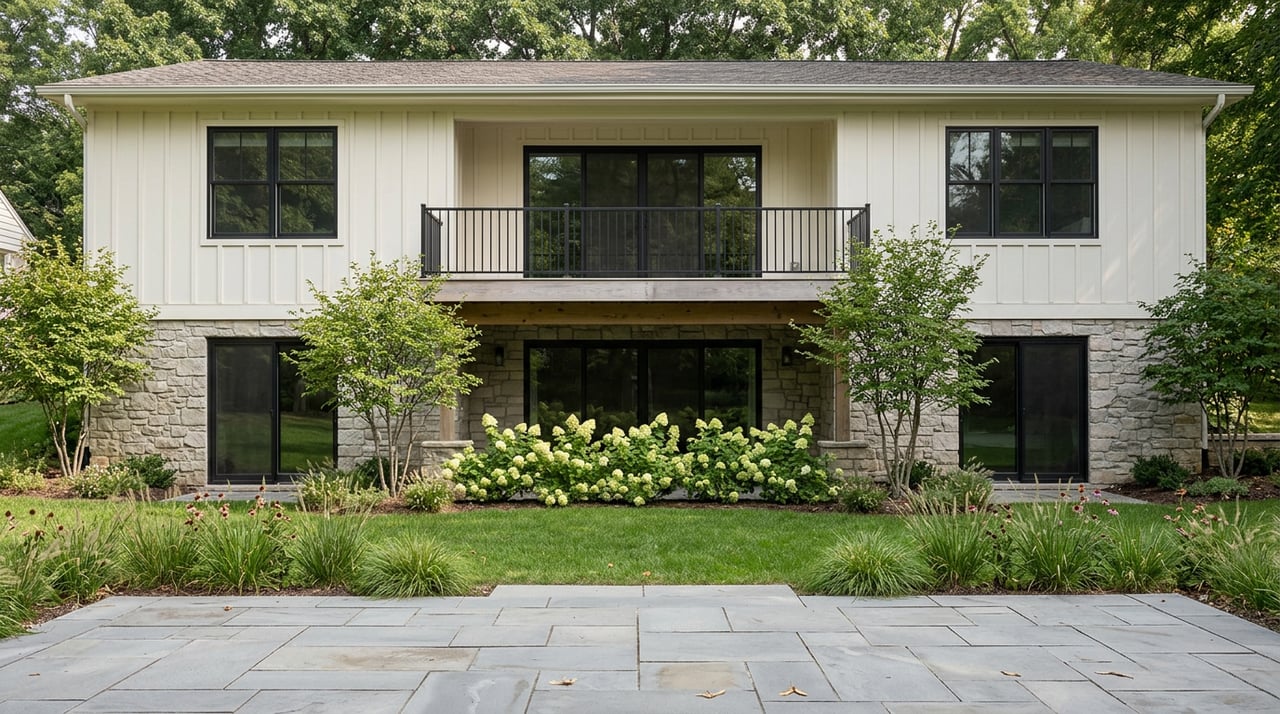
Woodbury's housing stock compounds the geology. Current listings across the city show finished, walkout, and lookout basements as a routine feature of newer construction, the exact space where radon concentrates and where families actually spend their time. Not every Woodbury home has a basement, though. Some are built slab-on-grade instead, with footings still poured below Minnesota's frost line, and a slab carries its own radon pathway through foundation cracks and utility penetrations. Whatever the foundation type, the testing protocol lands in the same place: radon tests conducted during a real estate transaction should be done in the lowest level of home that is occupiable for each foundation of the home, and the lowest level is typically the basement, whether finished or unfinished. In a city where finished basements are closer to the norm than the exception, that's rarely a formality.
Two Timelines for the Same Test
The test itself doesn't change based on who orders it. What changes is when it happens and who holds the leverage when the number comes back high.
| Seller tests before listing | Buyer tests during their contingency | |
|---|---|---|
| Who sets the schedule | The seller, weeks ahead of showings | The buyer's inspector, inside a contract deadline |
| A high reading becomes | A line item to fix before the home goes live | A renegotiation under time pressure |
| Who typically absorbs the cost | Budgeted seller expense, no urgency premium | Split, credited, or contested at closing |
Neither path is required by Minnesota law. But only one of them keeps the number out of the negotiation. A seller who tests early and mitigates on their own schedule lists the home with a clean radon file and nothing to explain. A seller who waits finds out at the same moment the buyer does, except now there's a closing date attached to the answer.
What the Reading Actually Costs
Radon testing itself is inexpensive relative to almost anything else on an inspection checklist. Real estate transactions call for a certified professional using a continuous monitor rather than a retail test kit, and that runs $100 to $200 in Minnesota for the professional version, with other national cost surveys putting the range closer to $150 to $800 depending on the market and whether multiple foundation types need separate devices. The test itself takes a minimum of 48 hours under closed-house conditions, which is why timing it alongside the general home inspection, rather than as an afterthought, keeps a transaction moving instead of adding a second wait.
Mitigation is where the estimates spread out further, and it's worth naming the gap rather than picking one number and hoping it holds. The Minnesota Department of Health puts general costs in the range of $1,500 to $3,000 for a professionally installed system. Several national contractor surveys land lower, closer to $800 to $2,500 for a standard installation. The difference tracks the complexity question more than any pricing disagreement: a simple single-point active sub-slab system on a basement or slab sits at the lower end of that range, while complex or crawlspace foundations that need multiple suction points cost more. A Woodbury home with a single poured basement and no unusual layout will likely sit toward the lower end of both ranges. A home with a mix of foundation types, a finished lower level, and a sump pit that needs sealing moves toward the higher one.
The Practical Timing Question
None of this argues that every Woodbury seller needs to test before listing. It argues that the choice not to test isn't actually a choice to avoid the radon conversation. It's a choice to have that conversation later, under contract, with a deadline attached and less room to shop mitigation quotes at leisure.
For a seller weighing the two paths, the calendar math is straightforward. A test ordered before listing takes two days to run and a few more to get results, leaving time to line up bids if mitigation turns out to be necessary. A licensed radon mitigation professional in Minnesota is required to hold that license, and confirming it before signing a contract is worth the five minutes it takes, since the Radon Licensing Act requires anyone who performs a radon test or radon mitigation in a building they do not own or lease to be licensed by MDH, and industry or other certification is not sufficient. That same lookup works just as well for a buyer trying to confirm a seller's prior mitigation was done correctly.
For sellers of newer construction with a lookout or walkout basement, a layout common enough across Woodbury listings, the case for testing early is stronger still, simply because those finished lower levels are where families spend evenings, not just where the furnace lives.
A Few Direct Questions
Does Minnesota require a radon test before selling a home? No. The law requires written disclosure of any radon information the seller already has. It does not require the seller to generate that information by testing.
What happens if a buyer's test comes back high right before closing? It becomes a negotiation, usually over who pays for mitigation or whether the closing date needs to move to accommodate installation and a confirming retest. That negotiation happens with a signed purchase agreement already in place, which is a different bargaining position than fixing the issue before a home is shown.
Do most Woodbury homes have basements? Most do, including a large share of finished, walkout, and lookout basements in newer construction, though not every home built in recent years includes one. Either way, the test targets the lowest occupiable level of whatever foundation the home has.
If you're weighing when to test, what a mitigation bid should actually include, or how to time a radon result against a listing date, that's exactly the kind of pricing and timing strategy conversation worth having before the sign goes in the yard. Matthew Vorwerk works these questions with Woodbury sellers directly. Let's Connect.