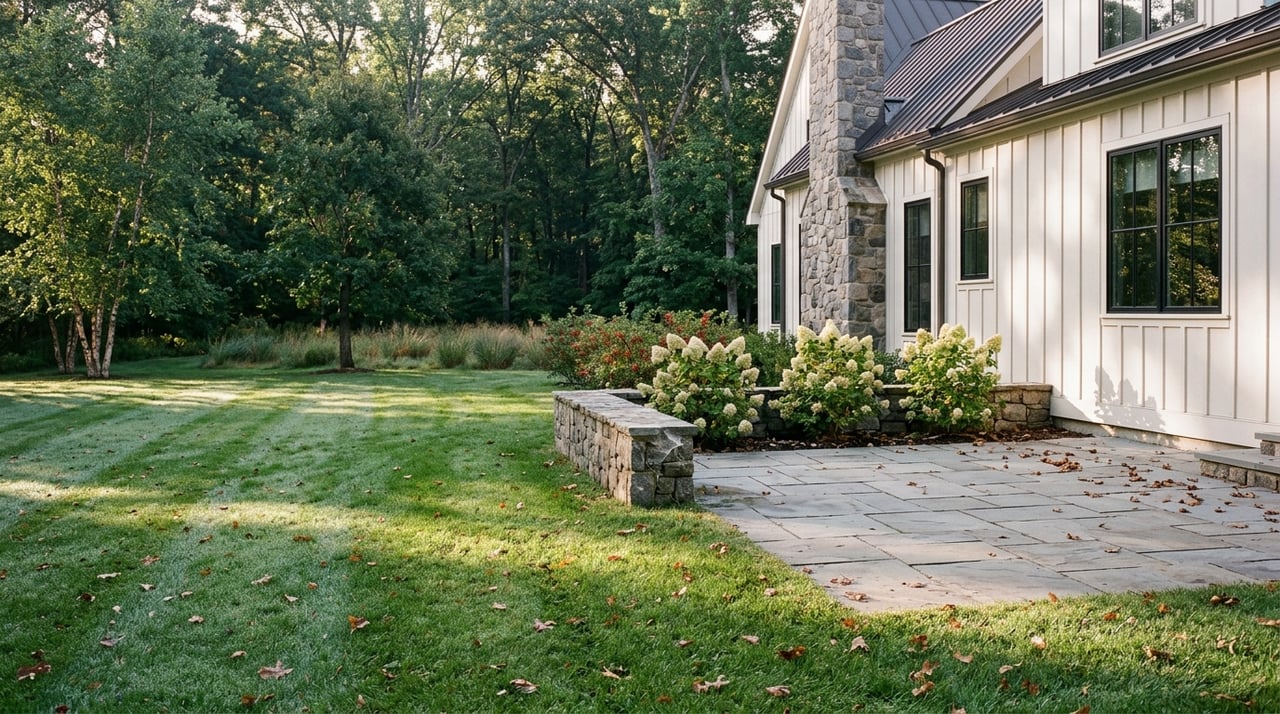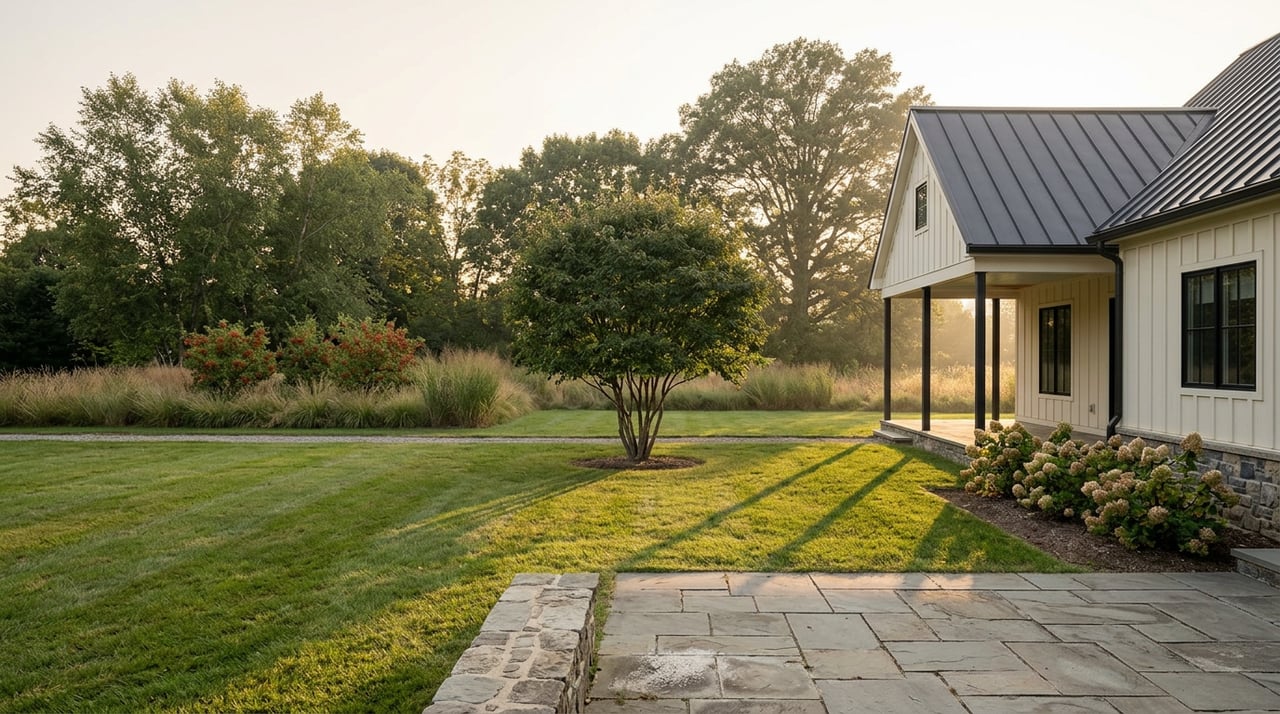
Ask a builder what "open space" means and you'll hear about trails, tree lines, and views. Check the actual zoning file at Lake Elmo City Hall and you'll find something more specific: a density formula, an impervious surface variance, and a septic design requirement that has nothing to do with scenery and everything to do with what your lot can and can't hold.
That gap between the marketing word and the zoning term is the whole story behind Granvia Preserve, the 110-acre subdivision that Lake Elmo's City Council approved for a preliminary plat on April 7, 2026. It's worth understanding now, because it's the first project of its kind the city has approved in two decades, and it won't be the last.
What the City Actually Approved
The property sits between 50th and 55th Streets, near the Sanctuary, Carriage Station, Fields of St. Croix, and Tana Ridge neighborhoods, not far from Stillwater Area High School and Highway 36. Applicant Twin Cities Land Development LLC and builder Landucci Homes Inc. brought the city a plan for 58 single-family detached homes on land currently zoned Rural Residential, requesting a rezone to an Open Space Planned Unit Development overlay.
That request matters because of what Open Space PUD zoning lets a developer do that standard Rural Residential zoning doesn't: cluster homes more tightly in exchange for preserving a larger share of the site as common open land. Lake Elmo's senior city planner told the council that the city hadn't approved this type of overlay in 20 years, a detail confirmed in reporting from the Stillwater Gazette on the April meeting. The Planning Commission had already recommended approval unanimously, 6 to 0, at its March 9 hearing.
The resulting density works out to roughly half a unit per acre, well below what a suburban subdivision typically runs, and the site plan preserves about 55 percent of the total acreage as open space.
The Trade Nobody Puts on the Sign
More open space on paper means less standard lot on the ground. The two numbers move together, not independently.
That's the mechanism, stated plainly. A developer doesn't get to preserve over half a site's acreage without asking for flexibility somewhere else in the code. In this case, the flexibility shows up as a citywide impervious surface variance: Lake Elmo's standard code caps impervious surface, meaning driveways, patios, and roof footprint, at 30 percent per lot. The Granvia Preserve plan asked for a blanket approval of 40 percent per lot instead, citing unique lot shapes and the amenities buyers expect. City staff found the request reasonable, noting that even with the higher per-lot allowance, the site's total impervious surface comes in around 19 percent once the preserved acreage is factored in.
Here's what that means for a buyer standing on an individual lot rather than looking at the aggregate site plan. Your driveway, patio, and roofline can legally cover more of your parcel than a typical Lake Elmo lot next door under standard zoning. The open space you're paying a premium for isn't spread evenly across every yard. It's concentrated in the shared land the HOA will maintain.
| Standard Rural Residential Lot | Granvia Preserve (Approved) | |
|---|---|---|
| Max impervious surface per lot | 30% | 40% (blanket variance) |
| Site-wide impervious surface | Varies by lot | ~19% |
| Preserved open space | Not applicable | ~55% of site |
| Sewer service | Case by case | Septic required |
| Sidewalk standard | Concrete | 8-ft bituminous trail (HOA-maintained) |
The Wetlands Do the Real Zoning Work
The 110-acre parcel contains 13 wetlands. Under the approved plan, 11 are preserved with buffer zones and two are removed. Wetland buffers aren't decorative. They're setback lines that shrink the usable, buildable portion of a lot regardless of what the zoning code technically allows. A buyer comparing two similarly-priced lots in this development should ask which one backs up to a preserved wetland buffer, because that buffer will determine where a fence, a shed, or even a patio extension can legally go long after closing.
No City Sewer Comes With This Kind of Land
One detail that surprises buyers moving from more urbanized suburbs: the preliminary approval for Granvia Preserve explicitly requires septic design to be met as a condition of final plat approval. This isn't unusual for rural-zoned Lake Elmo parcels, but it does mean a "new construction" home here isn't automatically tied into municipal sewer the way a similarly new subdivision in Woodbury or inner Stillwater would be. Septic systems on newly platted lots need engineering sign-off tied to soil conditions and lot size, and that review happens on a lot-by-lot basis as the project moves from preliminary to final plat.
Who Actually Pays for the Trail
The developer proposed an 8-foot-wide bituminous trail along the roadway instead of the standard concrete sidewalk the city code calls for, specifically to create a contiguous trail system tying into the preserved open space. City staff agreed to the substitution on the condition that the homeowners association, not the city, takes on maintenance. That's a small line item in a staff report that becomes a real number on an HOA budget once the development is built out. Anyone comparing HOA dues across Lake Elmo neighborhoods should ask whether trail and sidewalk maintenance sits inside that number, because it often isn't broken out separately in early marketing materials.
This Isn't a One-Off
Granvia Preserve is one project moving through Lake Elmo's development pipeline, not the whole picture. The city's own development projects list also shows Highpointe Crossing, an 18-unit rural lot development working through a standard Council preliminary plat review on a separate timeline, alongside North Star, Prairie Sky, and the Inwood Townhomes project from national builder M/I Homes. Some of these follow conventional Rural Residential rules with none of the open space trade-offs described above. Others don't.
The pattern worth noticing: Lake Elmo is actively converting rural-zoned acreage into subdivided residential product on multiple fronts at once, and the zoning path each project takes changes what a buyer is actually purchasing, from lot coverage to sewer type to who's responsible for the trail out front. Twin Cities Land Development LLC, the applicant behind Granvia Preserve, has a track record of similar projects across the east metro, including Aster Landing in Woodbury, which gives some indication of how this builder typically executes once a plat moves from preliminary to final.
What to Ask Before You Write an Offer
If you're looking at a lot in a Lake Elmo subdivision built under an Open Space PUD or similar overlay, a few questions will tell you more than the marketing brochure will:
- Has the specific lot's septic design been engineered and approved, or is that still pending at final plat?
- Does the lot border a preserved wetland buffer, and where exactly does that buffer line fall relative to the buildable envelope?
- What impervious surface percentage applies to this specific lot under the approved variance, and how much of that allowance is already spoken for by the home's footprint?
- Does the HOA budget include trail and sidewalk maintenance, and if so, what's the current estimated annual assessment?
- Is the project at preliminary plat or final plat, since conditions can still shift between the two?
A Short FAQ
What is an Open Space Planned Unit Development, in plain terms? It's a zoning overlay that lets a developer build homes on smaller, more clustered lots in exchange for preserving a larger share of the total site as shared open land, rather than spreading conventional-sized lots evenly across the whole parcel.
Why did Lake Elmo approve one after 20 years of not doing so? City staff and the Planning Commission found that the Granvia Preserve proposal met the code's performance standards for density, lot design, and preserved open space, and the Council approved the preliminary plat on April 7, 2026 after a unanimous Planning Commission recommendation the previous month.
Does a septic system reduce a home's value in Lake Elmo? Not inherently. Septic systems are common on rural-zoned Lake Elmo parcels and don't carry the stigma they might in a fully sewered suburb. The relevant question for a buyer is whether the specific lot's septic design has been engineered and approved, since that affects timeline and cost more than resale value on its own.
Lake Elmo's zoning map is changing lot by lot, and the terms attached to each new subdivision matter as much as the price per square foot. If you're comparing a lot in one of these newer developments against an established Lake Elmo neighborhood, Matthew Vorwerk can walk through the specific plat conditions with you before you make an offer. Let's Connect.